Local singer and actor stars in Netflix film
1 day ago
Changes to the academic calendar announced last week will see the number of days children are in school reduced to 172, according to the NASUWT - Gibraltar’s Teachers’ Union.
But the Union says the revised structure will mean more full teaching days overall and fewer half-days.
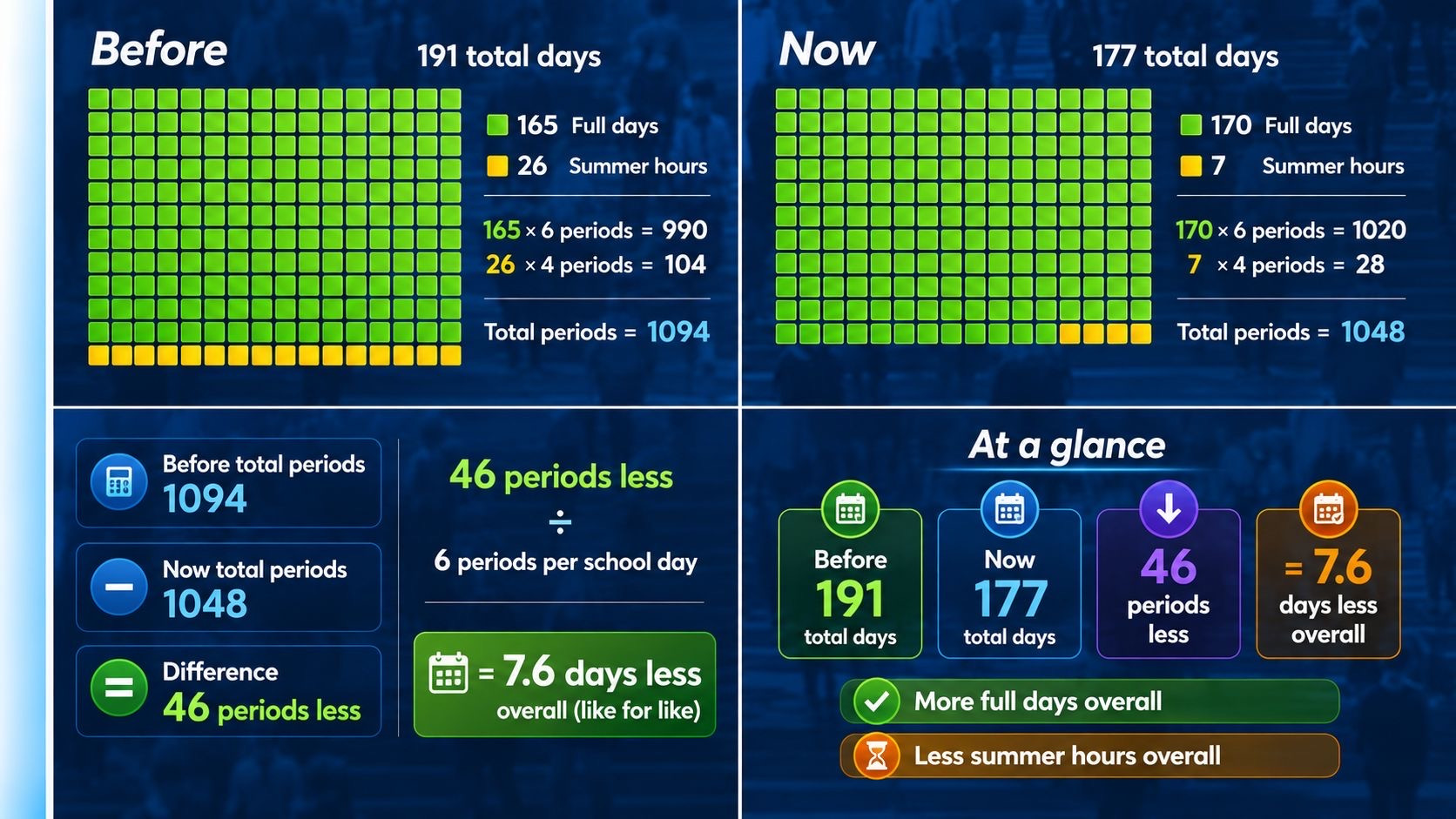
According to calculations provided to GBC, there will be five more full school days - going up from 165 to 170.
The figures show seven half days remaining in September. This is down from 26 under the previous arrangement.
Children in UK state education, following the same curriculum, are in school for 190 days per year.
Under the shake-up to the school calendar the Teachers' Union says that while the number of working days for teachers will go down from 191 to 177 - this only tells part of the story.
In a statement, the NASUWT says many of the days being removed are what it describes as 'disruptive' summer-hours days, where pupils attended fewer lessons than during a standard school day.
According to calculations shared with GBC, the previous calendar amounted to around 1,094 teaching periods overall.
Under the revised calendar, the union says this would drop to 1,048 periods.
When divided across a standard six-period school day, the union says this equates to around 7.6 teaching days fewer overall on what it describes as a “like-for-like” basis.
The Union says the changes also move Gibraltar’s school calendar closer to systems commonly used in southern Europe and Spain. A NASUWT spokesperson told GBC:
“It is important to recognise that, whilst comparisons with the UK are understandable given Gibraltar follows the English National Curriculum, Gibraltar’s climate and cultural context are quite different. In practical terms, our calendar structure is arguably more comparable to neighbouring regions in southern Europe and Spain, where school years commonly range between approximately 175–180 days depending on the region.”
The NASUWT says the revised calendar followed what it described as a member-led consultation process carried out through school representatives.
According to the union, 368 submissions were received from a possible 502 members - representing around a 73% engagement.
The union says a number of consistent “red lines” emerged during the process, including maintaining a September school year start date, two full weeks at Easter, a summer mid-term to reduce burnout and ensuring the academic year ended no later than the end of June.
The NASUWT says: "if Government, the Department of Education and teachers through their union have agreed to this change – it is because the quality of teaching won’t be impacted and we should trust the professionals."
Shown below are the figures provided to GBC by the NASUWT.