

Local singer and actor stars in Netflix film
2 days ago
McGrail Inquiry | 23rd December 2025, 15:01 |
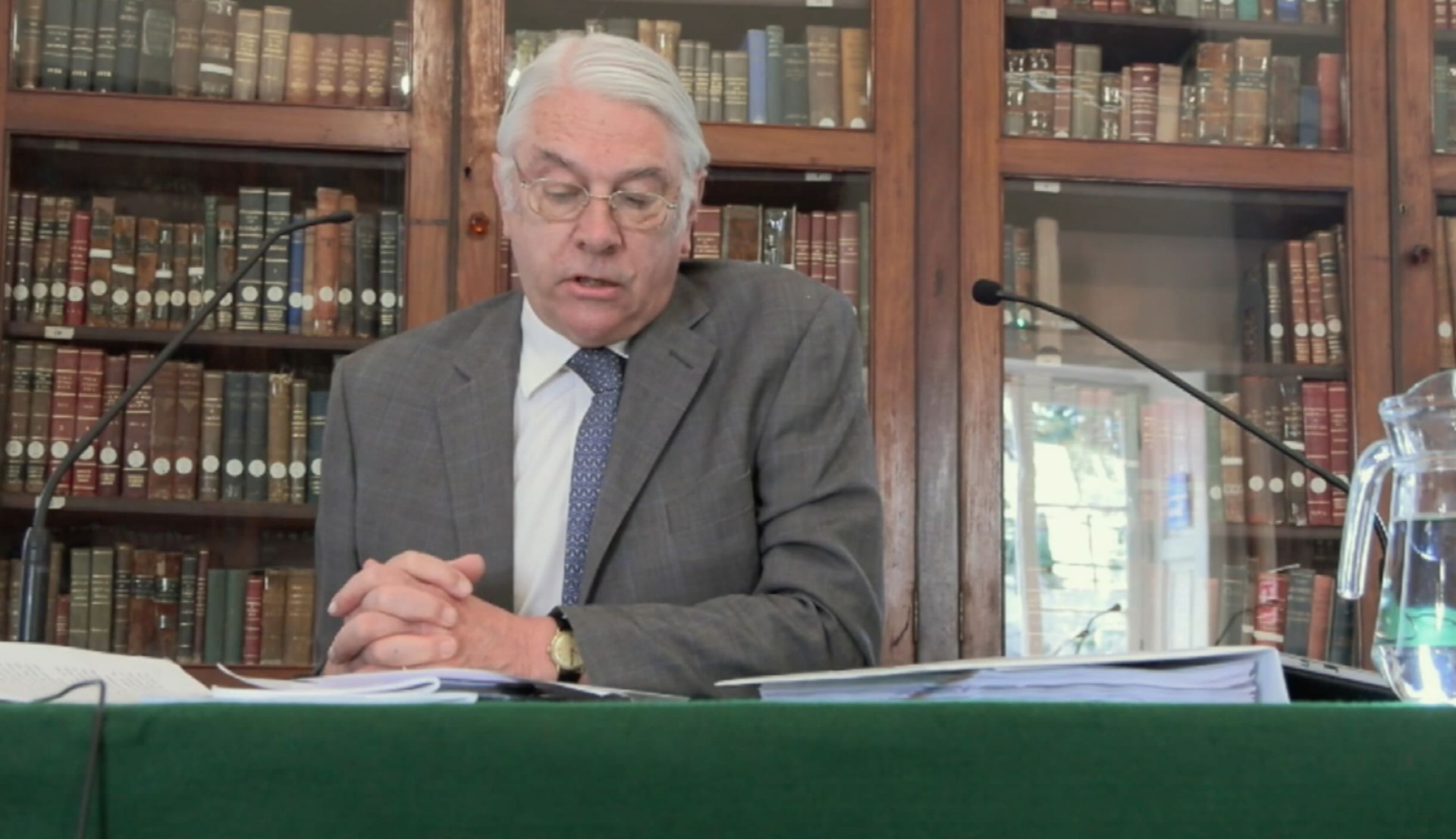
The Inquiry report makes several recommendations; these include measures to prevent and manage conflicts of interest for public office holders, to enshrine the Ministerial Code in law, and to define the Attorney General’s role more clearly.
Sir Peter Openshaw also has recommendations for the Police Act, the Gibraltar Police Authority and the Royal Gibraltar Police.
He declines to recommend that any form of redress, whether by way of apology or compensation, be made to Ian McGrail.
Sir Peter Openshaw also delivers a stark warning about Gibraltar’s culture of informal, unrecorded meetings among powerful figures, saying it risks blurring personal interests with the public good and falls far short of modern standards of transparency and accountability.
CONFLICTS OF INTEREST
Managing conflicts of interest in public office was the first of the Inquiry Report's recommendations.
Sir Peter Openshaw says consideration should be given to legislation, similar to the Canadian Conflict of Interest Act 2006.
He says there should be an "emphatic restatement of the principles as set out in the Ministerial Code", which should be enacted in law.
And he states that consideration should be given to more precisely defining the role of the Attorney-General, identifying when he might consider instructing external counsel.
The Chairman says the role Michael Llamas took at the three meetings with the RGP demonstrated the risks of potential conflict which might arise between 1) his duty and responsibility for instituting and undertaking criminal prosecutions, and 2) his duty and responsibility as the legal adviser to the Chief Minister and to the Government, and at the same time legal adviser to the Governor.
MINUTES AND NOTES
Sir Peter Openshaw recommends those attending critical meetings considering public affairs should take proper and accurate notes or minutes, which should be confirmed by a later exchange of emails.
In meetings where a substantive decision is being taken, each person should remind themselves, and others, of the capacity in which they are participating, and conflicts of interest should be declared.
The Chairman notes that, "time and time again, the key players to critical meetings, did not take proper or accurate notes, still less did they circulate them afterwards for approval. This failure has given rise to needless arguments, as to what was decided, when it should have been clear from accurate, contemporaneous notes".
POLICE ACT & GPA
The Chairman says the power to call upon the Police Commissioner to retire, contained in Section 34 of the Police Act, should be amended to set out clearly the procedures that must be followed by all parties when that power is exercised.
In respect of the GPA, he says that the Section should only be exercised for some good, sufficient and proper reason and that sufficient notice must be given to the Police Commissioner, with the reasons relied upon. He should then be allowed adequate time to make representations.
Sir Peter Openshaw also recommends an examination of the internal structure of the GPA, saying the Chair must be sufficiently robust, and payment for the role should be considered.
ROYAL GIBRALTAR POLICE
As for the RGP, he says any application for a search warrant in high-profile, sensitive or serious cases should be considered in detail by the Office of Criminal Prosecutions and Litigation, which should advise in writing.
The case should also be listed, allowing sufficient time for the Judge or Magistrate to read the application in advance.
Elsewhere in the report, he criticises the lack of proper procedures and protocols in place at the RGP for dealing with the destruction of data and devices once a police officer retires or is transferred.
Sir Peter Openshaw says he hopes and intends that the Recommendations he has made will give the recently appointed Steering Committee on the reform of the Police Governance some guidance as to the way forward.
NO APOLOGY OR COMPENSATION FOR IAN MCGRAIL
The Chairman declines to recommend that some form of redress for Ian McGrail be made, whether apology or compensation.
He states the reason for this is because, although he has identified that the procedure to remove the former commissioner from office was flawed, it is outside his Terms of Reference to a) decide whether this would provide Mr McGrail with some legal redress, and b) to speculate what might have been the outcome had the process not been flawed.
TRANSPARENCY AND PUBLIC ACCOUNTABILITY
Finally, although not included in his list of recommendations, Sir Peter Openshaw makes two observations in his report about the risks involved in a small community like Gibraltar when Ministers and citizens meet informally.
He warns of the potential for "inappropriate communications of confidential information, to the granting of inappropriate favours, and to the creation of inappropriate reciprocal obligations."
He adds, "Private meetings of public influential figures, particularly when old friends and business partners, discussing public affairs, without any proper note, lack transparency and are bound - at the very least - to give rise to the suggestion or appearance of impropriety."
Sir Peter Openshaw concludes, if the culture is "for a small pool of political, legal and business actors to conduct public business at such informal meetings, in private, without note or record, then I think that the culture and practice should change. It is out of step with modern standards of accountability and transparency, of which Gibraltar, as a progressive and prosperous democracy, should be an exemplar."
The Chairman also cautions against using the "jurisdictional argument" as Mr Picardo did in his defence of Mr Levy, because "To equate the personal interests of a small circle of rich, powerful and influential individuals in Gibraltar, many of whom are professional colleagues, and even friends, with the interests of Gibraltar itself, may tend to encourage or to conceal misconduct or inappropriate and improper interference in official business or public affairs. Otherwise, any action taken to protect these individuals, or their interests, could then be justified as protecting the "jurisdiction". This cannot be right, because then the ends will always justify the means, and those individuals and their interests, will always be protected."